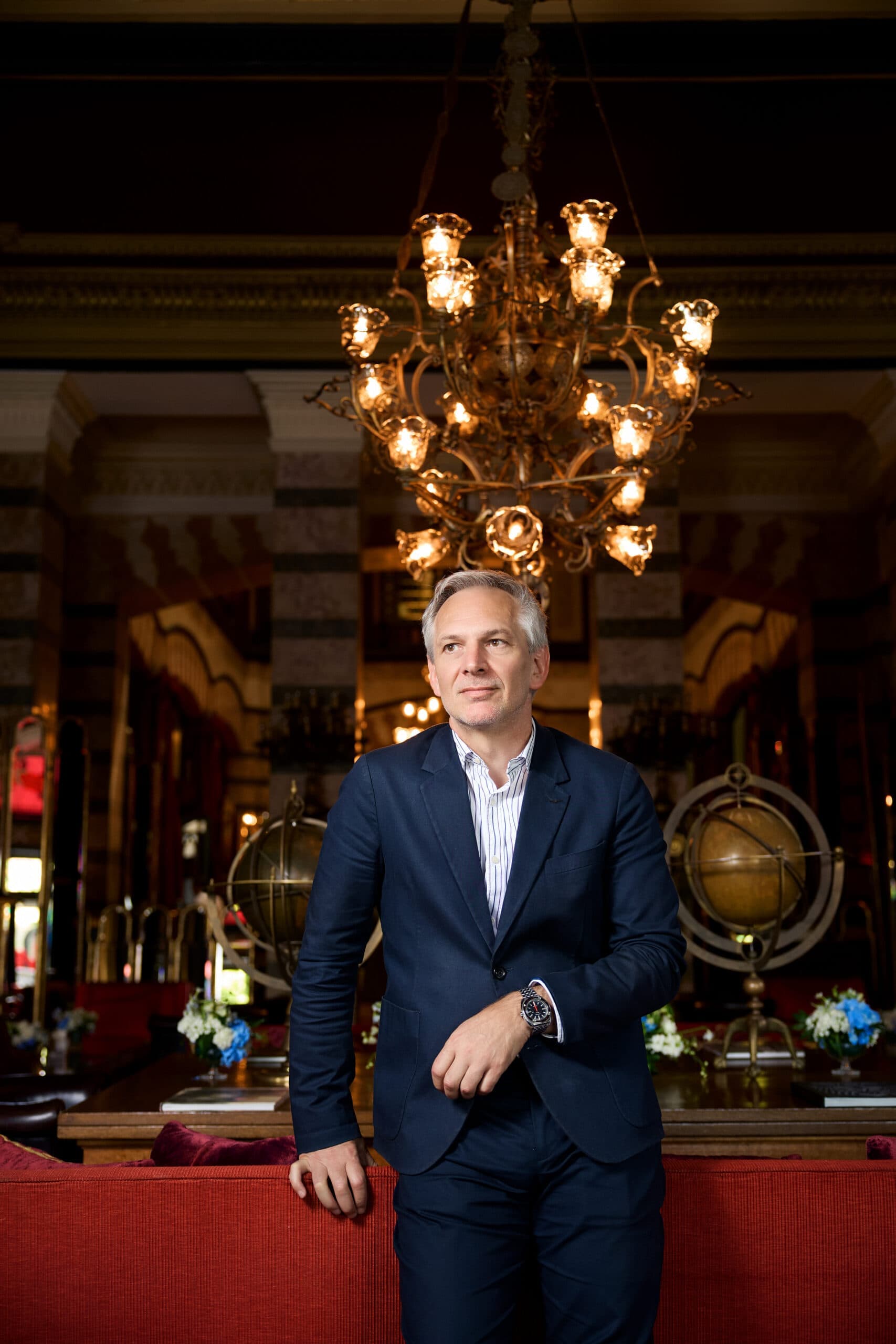
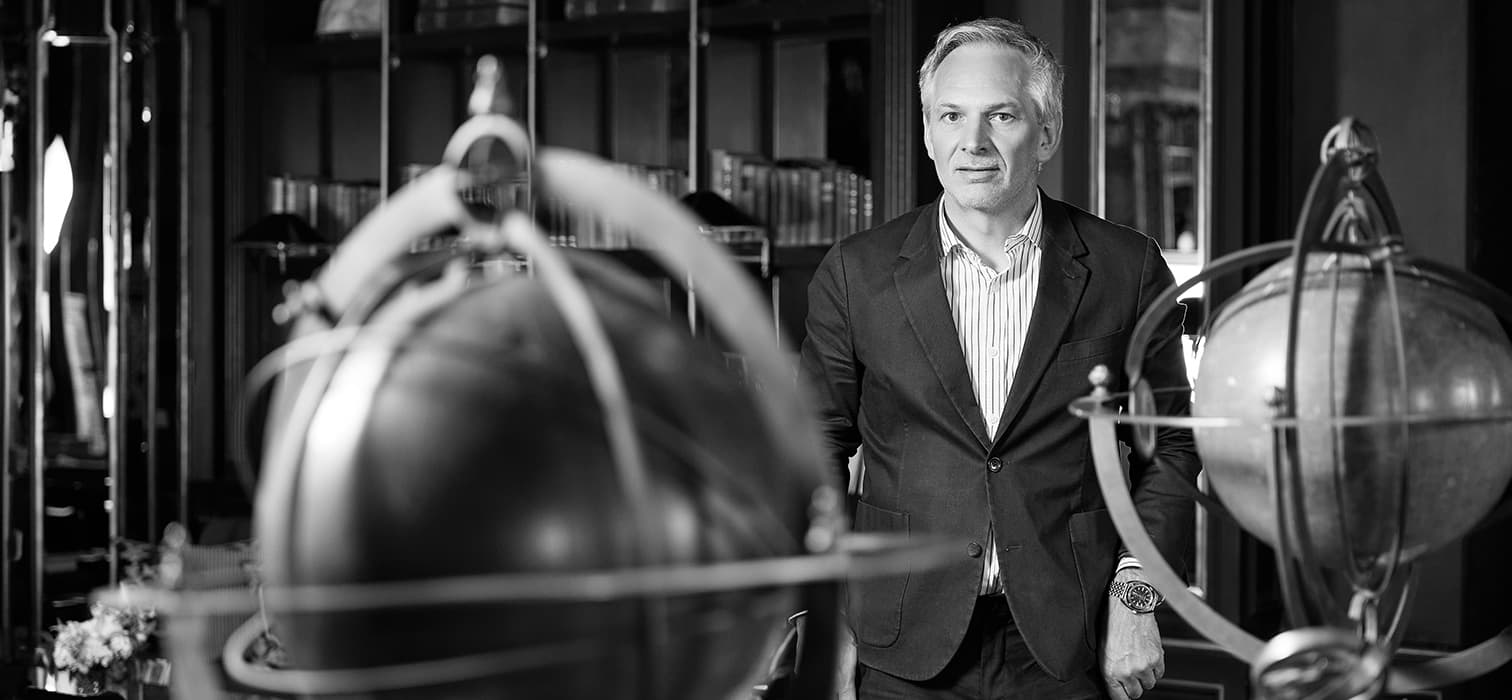
Before the Longines event discussing the brand’s history in the Ottoman era, we had the opportunity to sit down with Longines Heritage Director Daniel Hug.

At the beginning of the 20th century, the famous Orient Express, traveling from the heart of Europe, Paris, to the jewel of the Orient, Istanbul, was revitalizing Ottoman lands in international trade by connecting cities with long railways. However, the cities connected by these extensive railways could not meet in the same time zone. In the Ottoman Empire, time was running differently compared to European cities, and a local timekeeping system was used. A solution to this time discrepancy came from the Swiss watch brand Longines. The brand developed the first pocket watch capable of displaying two different time zones in 1908. This is how Longines’ path intersected with the Ottoman Empire. This two-century-old story was shared with watch enthusiasts at a recent event hosted by Longines at the Pera Palace, where the brand’s Heritage Director Daniel Hug narrated the tale. Before this enjoyable event, we met with Daniel Hug to hear about the Longines legacy for the readers of Saatolog.
Can you tell us about Longines’ place in the watch industry?
By the late 1920s, we had developed many innovations still in use today, from flyback chronographs for pilots to dual-time zone wristwatches announced in 1925. In 1931, the first wristwatch with a rotating bezel, the Longines Lindbergh, was designed. This was followed by the first high-frequency mechanism produced for a wristwatch in 1959, which was more accurate than all mechanical watches produced in the early 1960s. The Longines legacy shows our achievements to this day, inspiring us to develop new models. Especially the 1920s and 30s were significant years for professional timekeeping and supplying watches to aviators. All these innovations place Longines in a unique position compared to other brands.
For you, which is the most interesting side of Longines?
One of the most interesting aspects of Longines is undoubtedly its significant historical contributions and innovations. With a rich history in horology, Longines has made numerous advancements in timekeeping. Notably, the dual time zone indicator and rotating bezel, developed for early aviation, emphasize the brand’s pioneering role. The high-frequency pocket watch from 1914, which measured to 1/10th of a second, and the model from 1916, which measured to 1/100th of a second, showcase Longines’ precision and engineering excellence.