
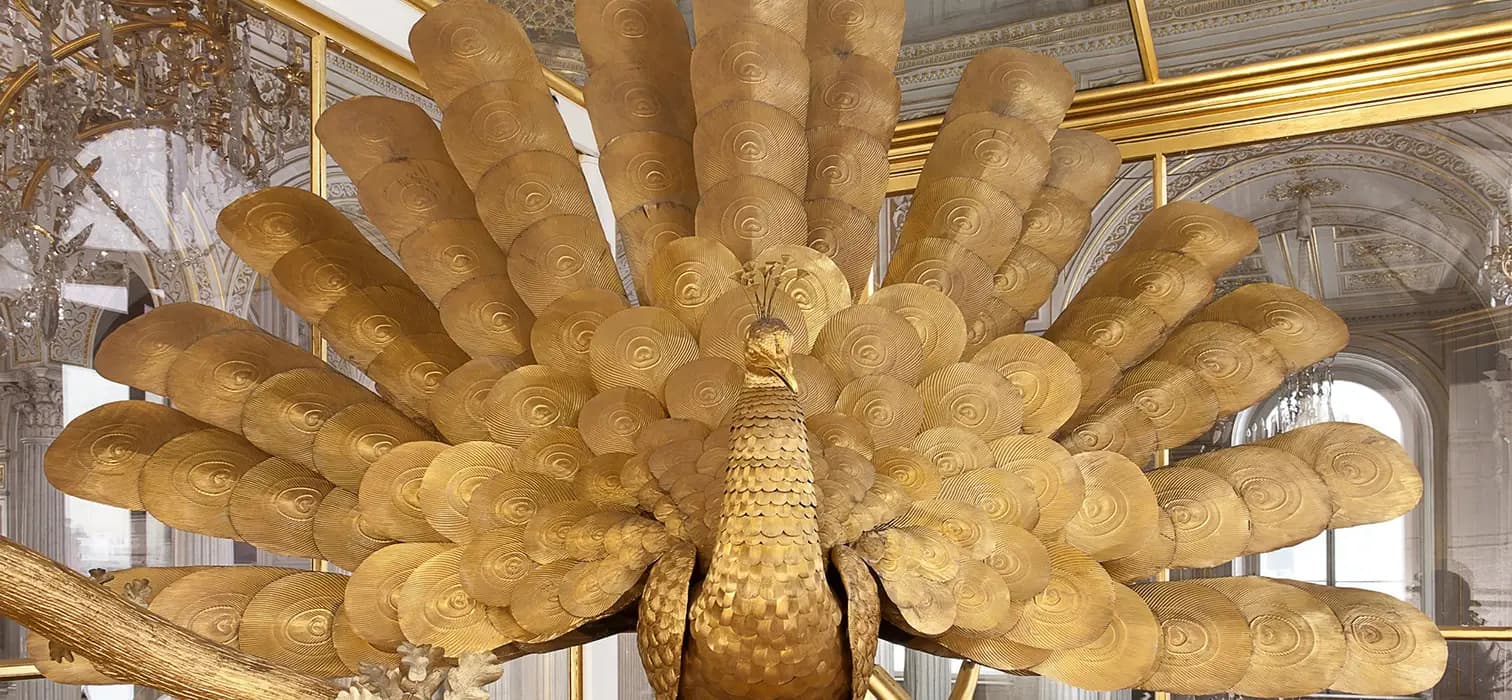
In the Pavilion Hall of the Hermitage Museum, the Peacock Clock dazzles with its gold-plated figures and mechanical brilliance—a true emblem of imperial grandeur.
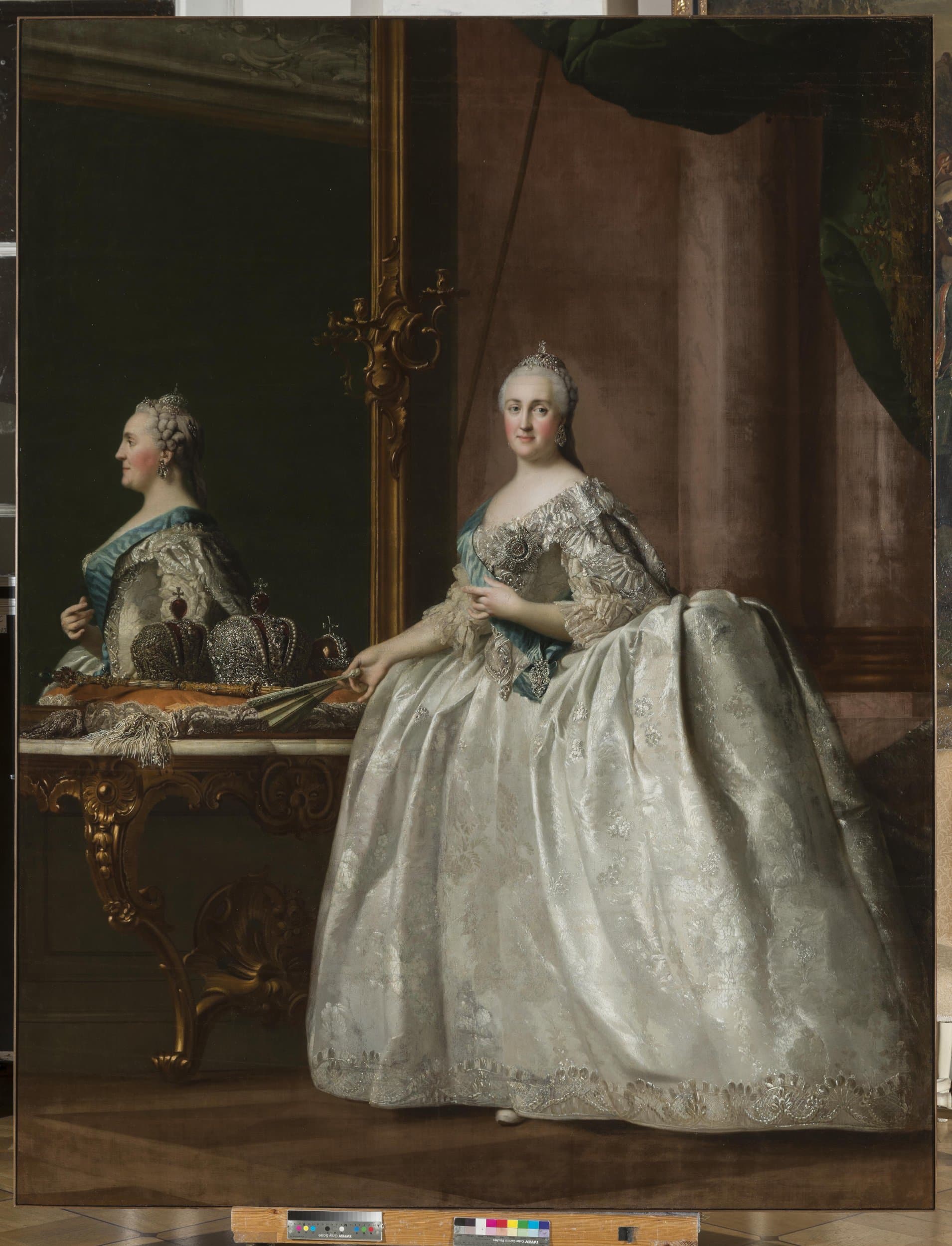
Catherine II, also known as Catherine the Great, ruled with more than a crown. Her power lay in her words, her gaze. Balancing reason and desire, discipline and passion, she projected authority through expression alone. Her smile concealed diplomacy; her silence, revolution.
Photograph © The State Hermitage Museum / photo by Pavel Demidov, Vladimir Terebenin, Leonard Kheifets, Yuri Molodkovets, Alexander Koksharov.
The Jewel of an Empire’s Artistry
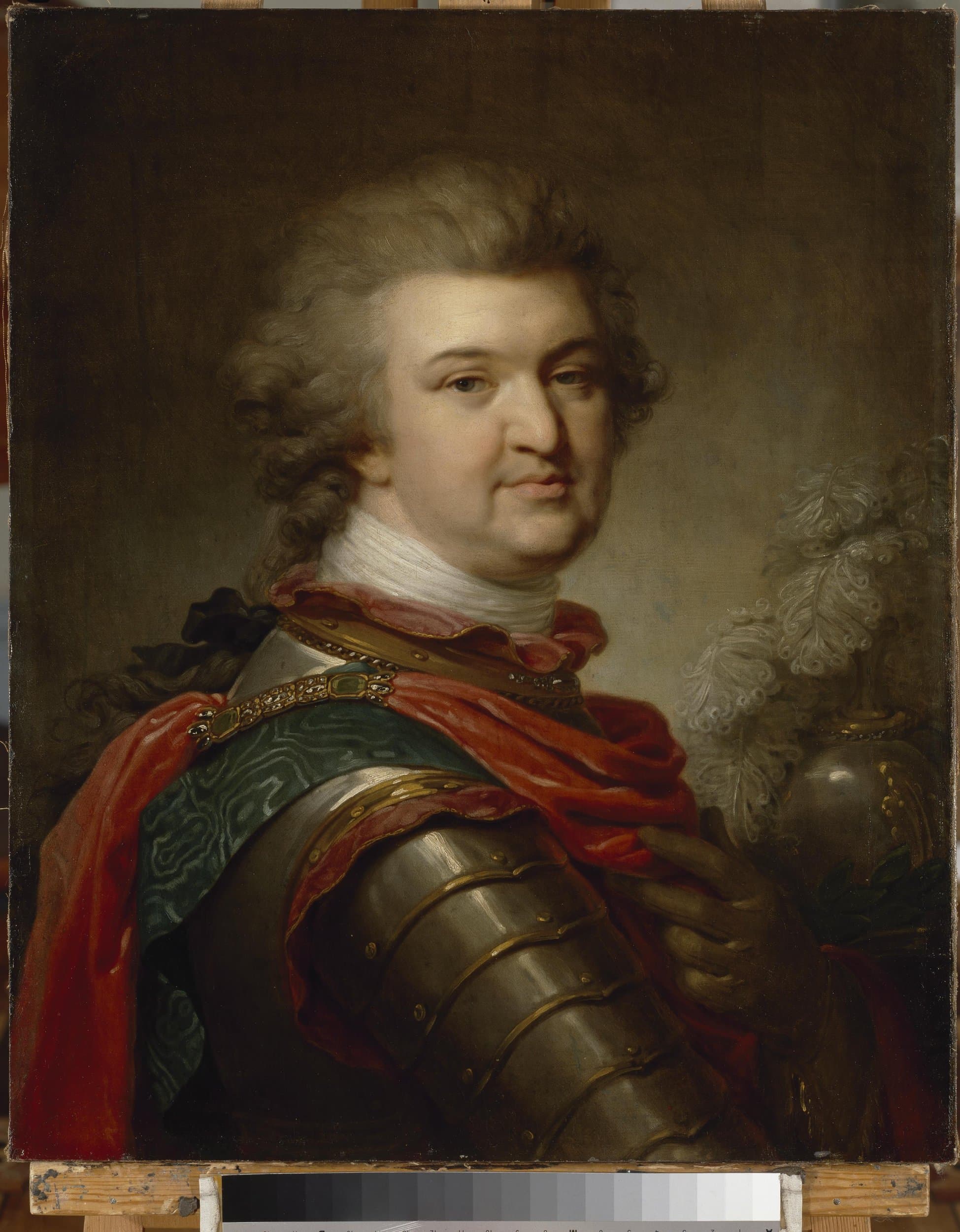
In the late 18th century, a whisper echoed through the lavish halls of Empress Catherine II’s palace: a marvel had arrived—a mechanical masterpiece like no other. The Peacock Clock, adorned with golden leaves and birds, resembled a jewel brought to life. Created by James Cox, a celebrated London-based clockmaker and jeweler, the work was a pinnacle of 18th-century mechanical artistry, known throughout Europe and Asia. Construction began in England in the late 1760s and was completed in the 1770s. The clock came to Russia through Prince Grigori Potemkin, a powerful statesman and Catherine’s lover, who intended it as a gift for the Empress.
Photograph © The State Hermitage Museum / photo by Pavel Demidov, Vladimir Terebenin, Leonard Kheifets, Yuri Molodkovets, Alexander Koksharov.
Assembly and operation were entrusted to Russian inventor Ivan Petrovich Kulibin, who spent three years bringing the mechanism to life. In 1794, it finally began to function. Tragically, Potemkin did not live to witness it in action. Catherine, however, took it under her protection. In 1797, the Peacock Clock was moved from the Tavrichesky Palace to a special room in the Small Hermitage. Since then, it has stood as one of the crown jewels in Russia’s artistic treasury.
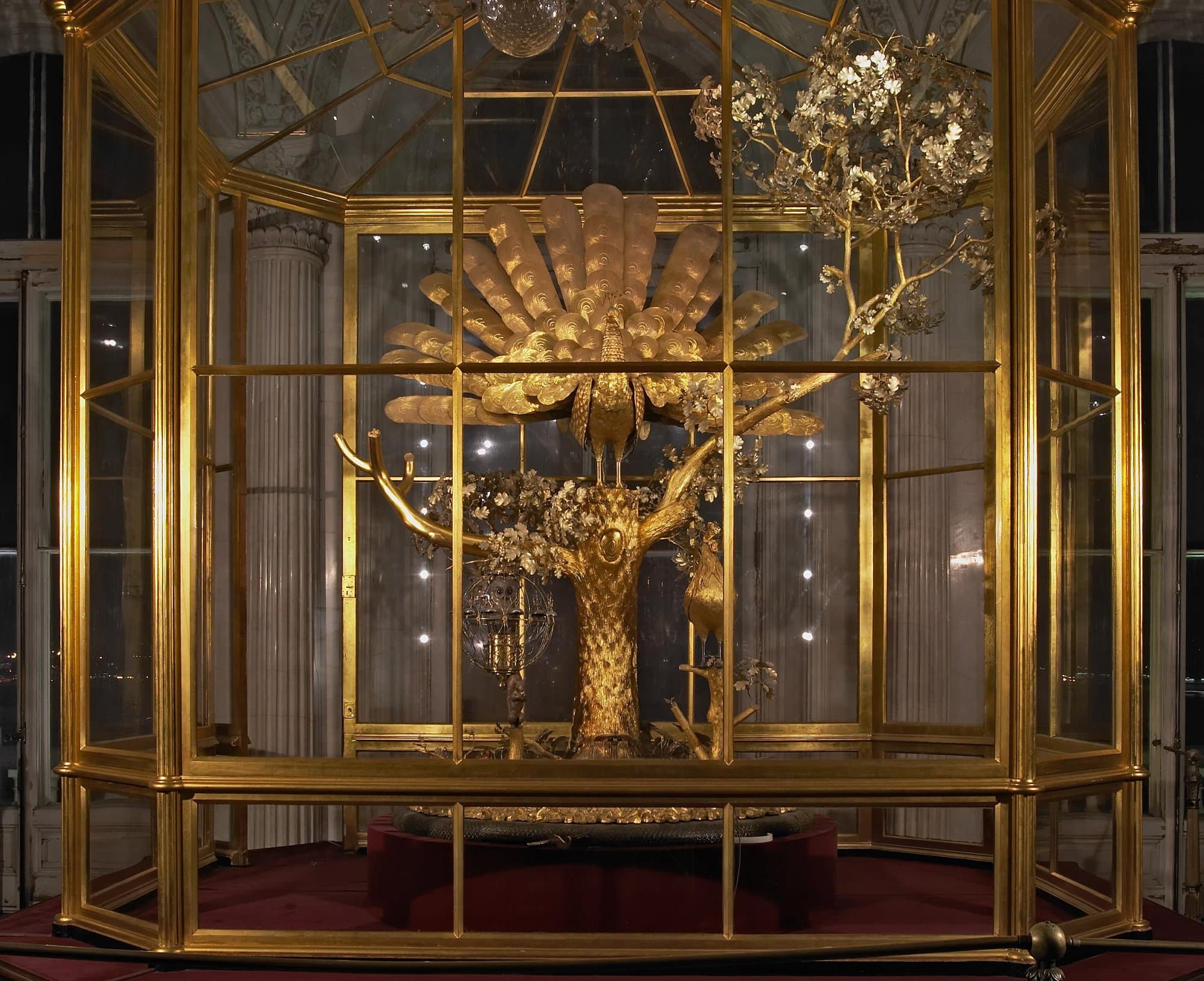
Now exhibited in the Pavilion Hall of the Hermitage Museum, the Peacock Clock is housed in an elegant octagonal glass case. It features three primary figures arranged on the branches of a gilded oak: a peacock, a rooster, and an owl. Squirrels appear among the branches like quiet sentinels. Though they appear sculptural, these are functional figures—part of a musical automaton that stages a theatrical performance.

Photograph © The State Hermitage Museum / photo by Pavel Demidov, Vladimir Terebenin, Leonard Kheifets, Yuri Molodkovets, Alexander Koksharov.
The timepiece’s dial is cleverly hidden in the cap of a large mushroom at the tree’s base. Roman numerals mark the hours; Arabic numerals show the minutes. A dragonfly perches atop the mushroom, flapping its wings as a delicate second hand.
James Cox designed four separate mechanisms for this intricate work: three to animate the peacock, owl, and rooster, and a fourth for timekeeping. Far more than a decorative curiosity, the clock rose above the fashionable “toy” timepieces of the era to become a kinetic artwork that told time with theatrical flair.
Photograph © The State Hermitage Museum / photo by Pavel Demidov, Vladimir Terebenin, Leonard Kheifets, Yuri Molodkovets, Alexander Koksharov.
The Ornament of Power
The clock’s creation coincided with a flourishing of art and science in Russia. Catherine II, a devout admirer of Enlightenment ideals, was passionate about both. She corresponded with intellectuals like Voltaire and Diderot, and the Hermitage collection she began in 1764 overflowed with masterpieces from across Europe.
Catherine reveled in expressing her power through art. The Peacock Clock, a gift from Potemkin, perfectly captured her imperial vision. Mechanical clocks were the rage in European courts. In France, Vaucanson’s ducks and Jacquet-Droz’s musicians entertained kings—Catherine needed a spectacle to rival them. The Peacock Clock surpassed all expectations.
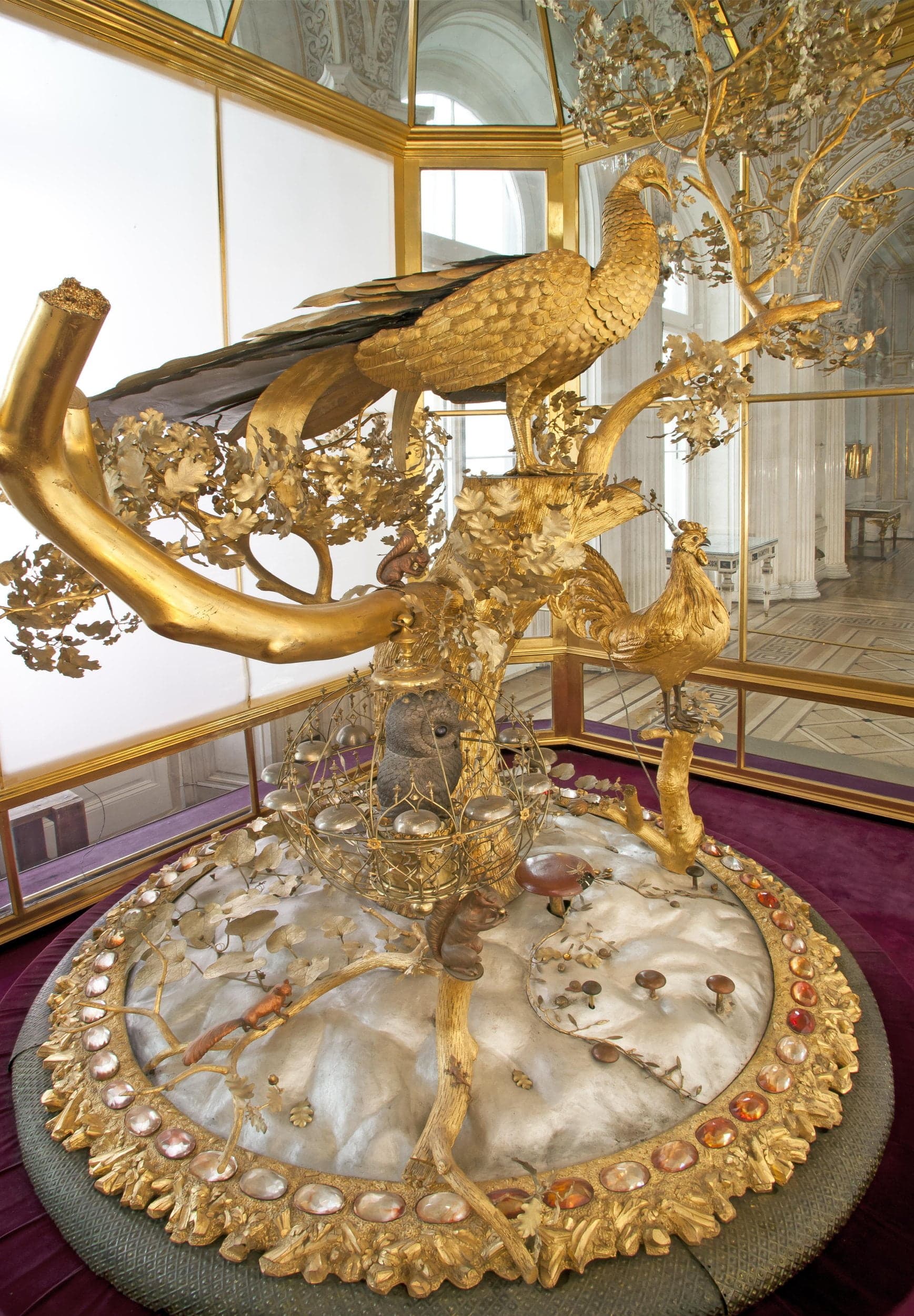
Photograph © The State Hermitage Museum / photo by Pavel Demidov, Vladimir Terebenin, Leonard Kheifets, Yuri Molodkovets, Alexander Koksharov.
Though crafted in England, the clock found its soul in Russia. The golden peacock, a symbol of opulence and splendor, soon became a cultural icon. Reassembled in the 1790s during the reign of Emperor Paul I, Catherine’s successor, the clock nonetheless remained known as Catherine’s miracle.
Later moved to the Pavilion Hall, the clock was enclosed in a protective case in the 1850s. It survived both war and Soviet-era upheavals, and remains preserved today. A mechanical marvel from the 18th century, it is the only large-scale automaton clock of its kind still in operation.
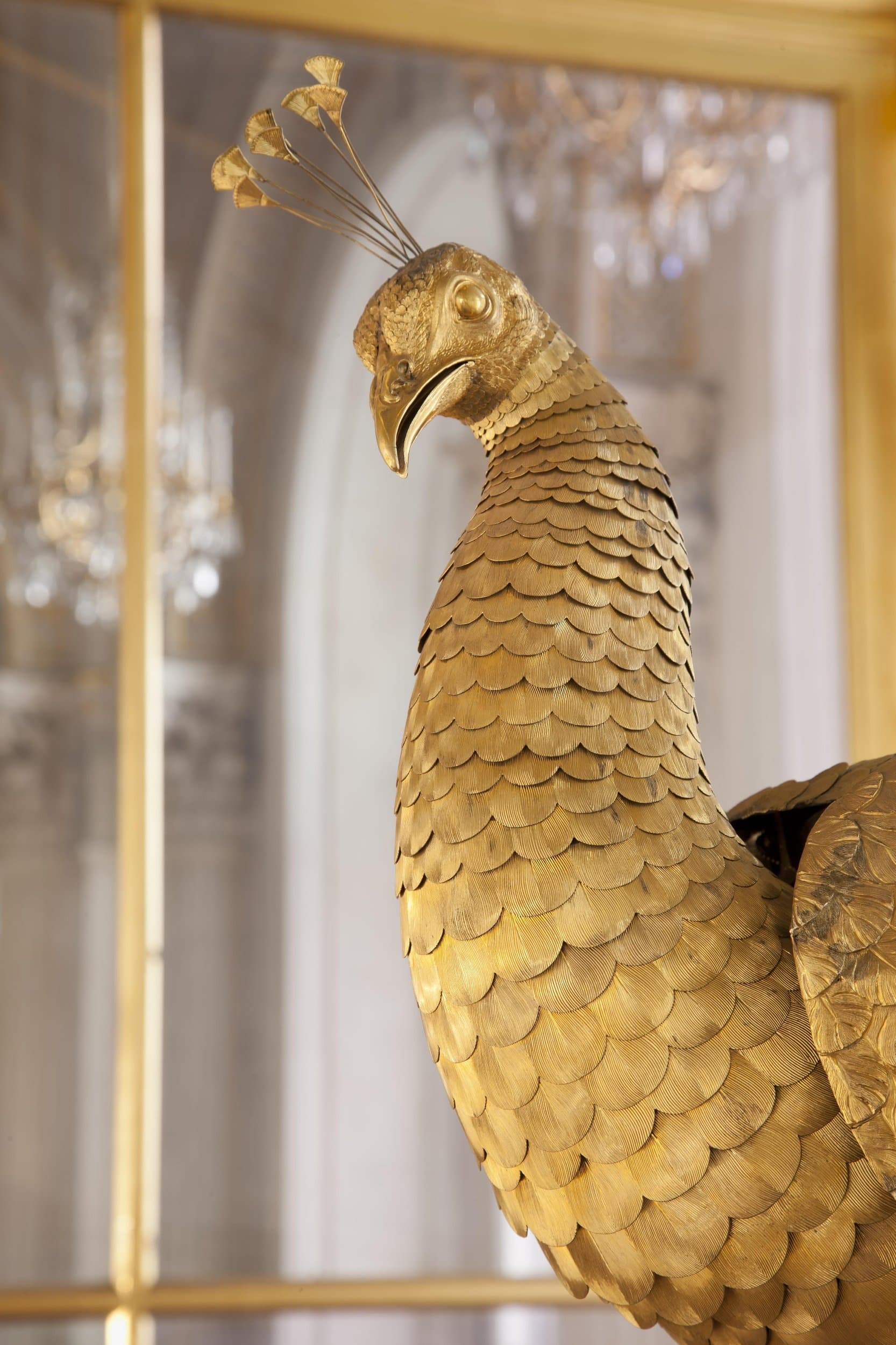
Photograph © The State Hermitage Museum / photo by Pavel Demidov, Vladimir Terebenin, Leonard Kheifets, Yuri Molodkovets, Alexander Koksharov.
Mechanical Magic, Artistic Feast
At a glance, the Peacock Clock resembles a golden woodland tableau: a massive oak with golden branches, adorned with acorns, leaves, and small animals. At the top sits a resplendent peacock, each feather gilded with painstaking detail. Even with its tail folded, it exudes majesty. Nearby, an owl perches in a miniature golden cage. Lower down, a proud rooster raises its comb and tail, poised for dawn. Squirrels nestled among the branches add lifelike charm, as though paused mid-leap. At the base, a mushroom-shaped dial keeps time seamlessly within this forest of gold.
Mechanically, the Peacock Clock is a wonder of its time. With a winding key, four motors spring to life. The clock’s core mechanism and the carillon—housed inside the mushroom—begin by striking miniature bells suspended from the owl’s cage. Their sweet chime signals the start of a show.
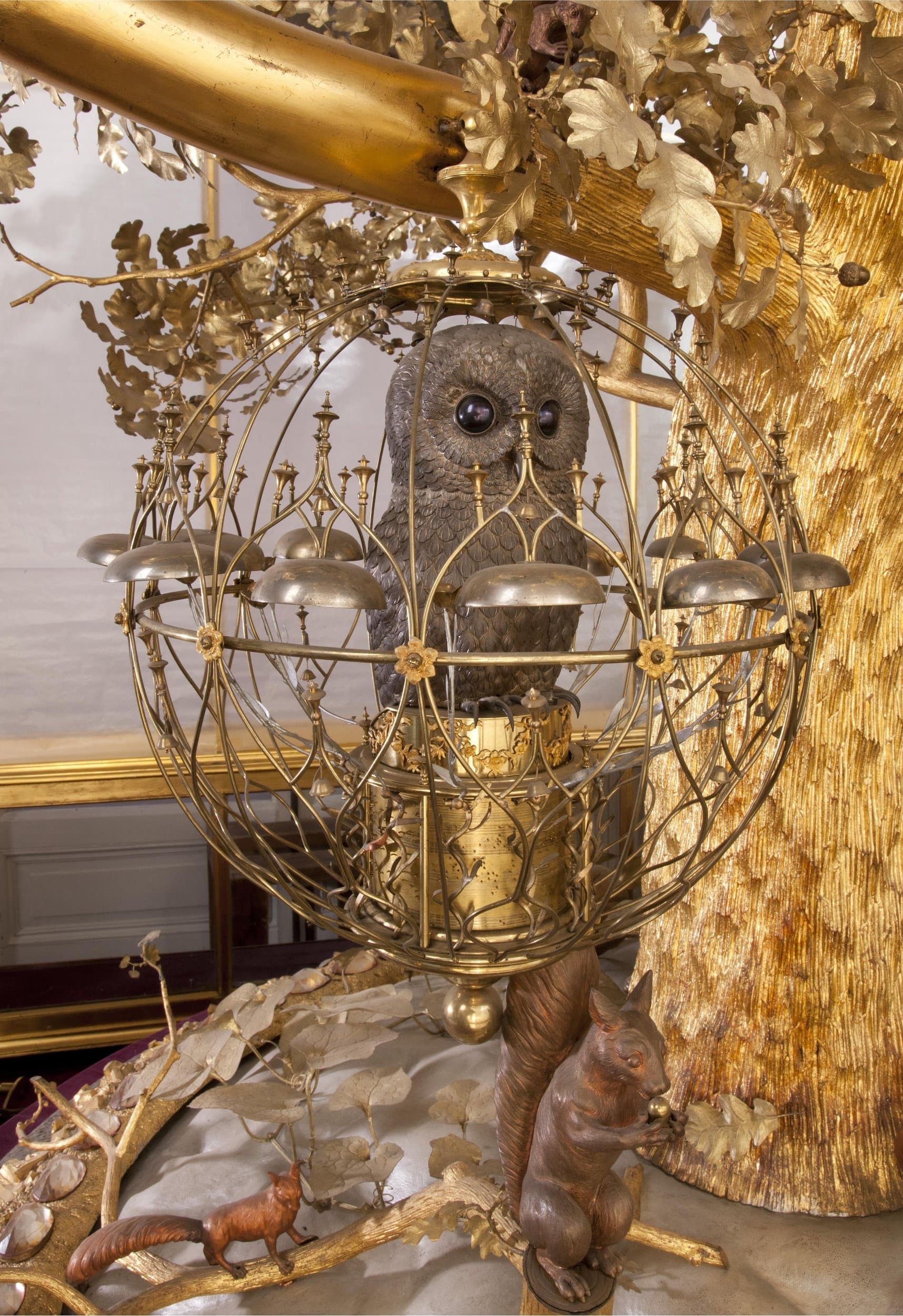
Photograph © The State Hermitage Museum / photo by Pavel Demidov, Vladimir Terebenin, Leonard Kheifets, Yuri Molodkovets, Alexander Koksharov.
The owl is first: its cage rotates, wings flutter, and eyes blink—it stirs like night wind whispering through the woods. Then the peacock moves. Its head lifts, its neck straightens, and its tail unfurls—a golden crown of feathers catching the light. The peacock turns slowly, revealing a silvery tail underside that gleams like moonlight. A pause, a silent invitation to admire its glory. Then, it closes its tail and resumes its perch.
Finally, the rooster takes the stage. It trembles, shakes its head, and crows—its voice a clarion call that signals morning. After several cries, the music fades, and the forest grows still once more.
All these movements take place in just a minute or two. But for the audience, time seems to stand still. When everything in the Hermitage’s Pavilion Hall comes to a standstill, no one speaks for a few seconds; the magic of what they have just witnessed still hangs in the air. Then the buzz returns to the hall; people begin to recount the details they have witnessed with admiration. It is as if a clockwork genie from centuries ago has paused time for a moment to tell its own fairy tale, and people are recounting it to others so that it will not be forgotten.
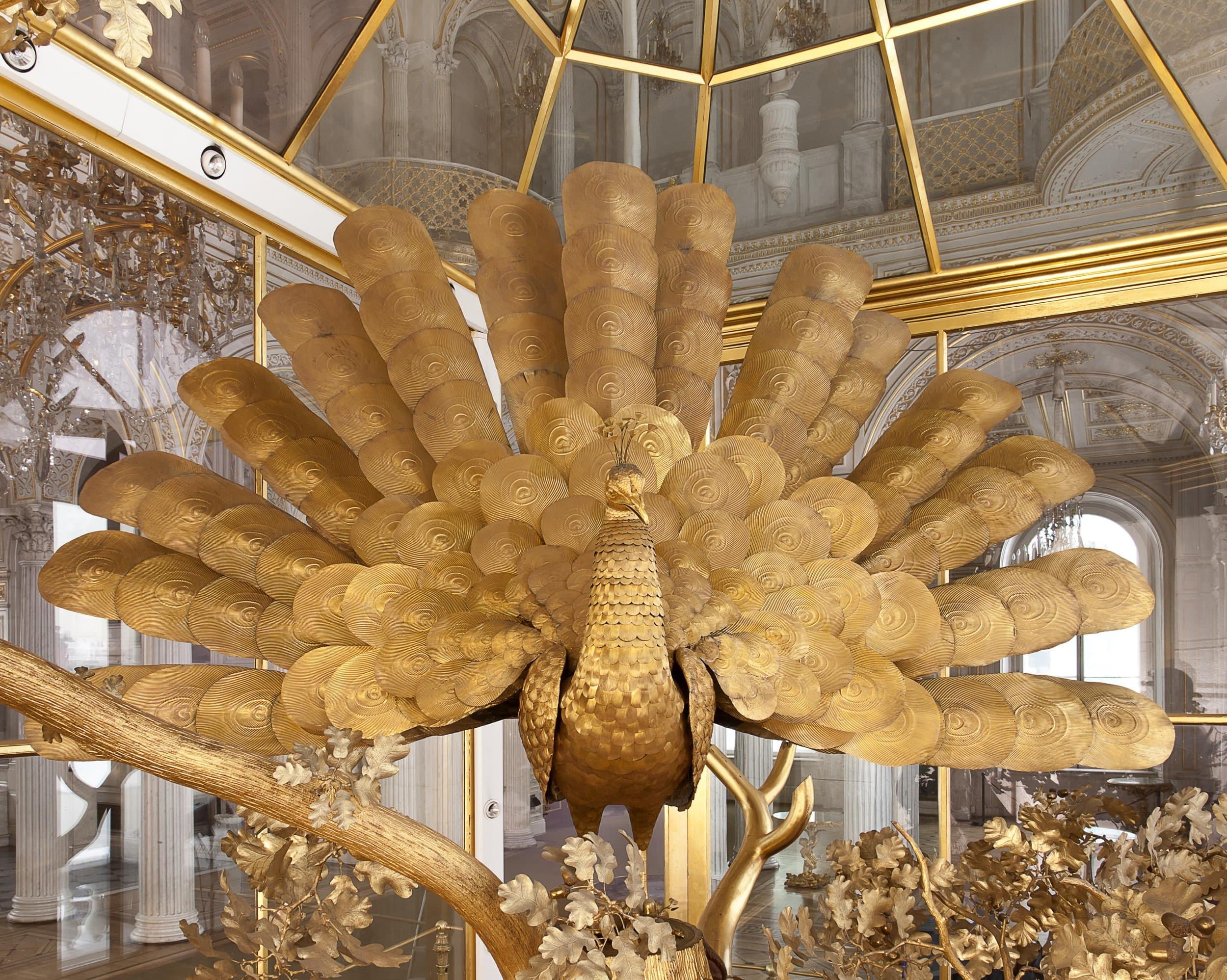
Photograph © The State Hermitage Museum / photo by Pavel Demidov, Vladimir Terebenin, Leonard Kheifets, Yuri Molodkovets, Alexander Koksharov.
A Fairy Tale About Time
Though the performance lasts only a minute or two, it feels like time itself has stopped. In the Pavilion Hall, silence follows the spectacle—guests hold their breath, suspended in wonder. Moments later, voices return, reliving the spectacle. As if summoned from another century, the clock tells a story—and visitors retell it so it won’t be forgotten.
Beyond beauty and craftsmanship, the clock carries deep symbolism. Each animal reflects the passage of time: the owl, symbol of night and its end; the peacock, embodiment of the cosmic order and celestial brilliance; and the rooster, the herald of dawn and new beginnings. The eye-like spots on the peacock’s feathers recall the stars, echoing the eternal mysteries of the universe.
In Christian symbolism, the rooster also signifies resurrection. Together, the trio represents a cosmic cycle: night, celestial peak, and morning. The Peacock Clock becomes a mechanical fable about time—about the sun, moon, stars, and the constancy of life. The message is clear: after every night comes morning. After darkness, the light always rises.

Photograph © The State Hermitage Museum / photo by Pavel Demidov, Vladimir Terebenin, Leonard Kheifets, Yuri Molodkovets, Alexander Koksharov.
The Peacock Clock, located in the Hermitage Museum, is demonstrated to visitors every Wednesday at 8:00 PM in the Pavilion Hall of the Small Hermitage. Schedules may vary due to maintenance or special events. Check the Hermitage Museum’s official website before visiting.
The Timeless Charm of Clock Towers in Istanbul
A Building that Become Master Over Time: Atatürk Cultural Centre